Seiko
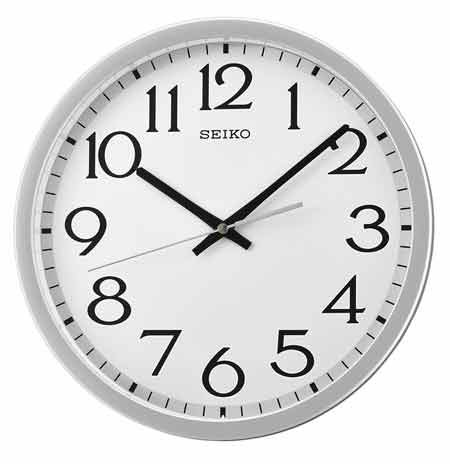
Seiko QXA711SLH Aluminum Quiet-Sweep Wall Clock
Quiet-sweep quartz · 12.25 inches · 1 AA battery
A music room clock should be readable when needed and acoustically forgettable when recording, practicing, or listening.
Quick answer
If the clock will be inside a recording path, prioritize silent movement over style. If it sits outside the room, readability and placement matter more than the movement label.
Field option
Source and product details are checked against the linked product page. Availability and price can change.
Seiko
Quiet-sweep quartz · 12.25 inches · 1 AA battery

Seiko
Quiet-sweep quartz · 12.25 x 12.5 inches · 1 AA battery
The best clock for a music room is the one you stop hearing. That sounds obvious until a quiet practice session exposes the thin, regular tick of a decorative wall clock or a bright digital display keeps reflecting in a monitor. In a living room, those details are harmless. Near a microphone, a pair of headphones, or a carefully balanced stereo system, they become part of the room’s behavior.
A clock tick is repetitive, predictable, and easy for the brain to notice when the rest of the room is quiet. A microphone does not need to be pointed directly at the clock for the sound to matter. Hard walls, desks, and instrument cases can reflect a small mechanical noise back into the room.
The problem is not limited to recording. A musician practicing quietly may start timing phrases against a tick without meaning to. Someone listening to an acoustic album may hear the room rather than the recording. The clock becomes an accidental metronome, but not a useful one.
A quartz movement is a starting point, not a guarantee. Traditional quartz clocks often advance the second hand in one-second steps, which creates the familiar tick. A quiet-sweep movement advances more continuously and is usually the safer choice for bedrooms, studios, and listening rooms.
Read the product language carefully. “Silent” and “quiet sweep” are more useful than a generic claim that a clock is quartz. If the listing does not explain the movement, assume that the second hand may be audible. Also consider the wall itself. A light clock mounted loosely on a hollow wall can transmit small vibrations even when the movement is relatively quiet.
Analog is usually easier on a music-room wall because it provides a quick reference without adding another glowing rectangle. A matte face and simple markers are easier to ignore while still readable during a rehearsal break. Place it where performers can see it between takes, not directly above a monitor or behind a singer’s sightline.
Digital can be useful in a rehearsal room, especially when people need exact minutes for a session schedule. The trade-off is brightness. A display that looks pleasantly readable in a store may be distracting in a dim studio. Dimming and automatic brightness controls are therefore more important than the number of extra features.
Before buying, stand where the microphone, listening chair, or main instrument will be. Ask three questions. Can the clock be read without turning your head? Is the display or face reflected in a screen or speaker? If the room goes quiet, could the movement be heard from that position?
The best location is often slightly off-axis: visible from the work area but not placed above the main listening position. Keep it away from the nearest microphone if the room is used for recording. In a mixed-use room, a quiet wall clock can sit near the door so it is useful during setup and less noticeable during performance.
For a music room that needs a simple, readable reference, the Seiko QXA711SLH is the right kind of product to evaluate: an aluminum wall clock with a quiet-sweep orientation rather than an exposed decorative mechanism. For a warmer living-room studio, a smaller Seiko QXA330SLH can provide the same basic time reference without making the room feel like a control room.
Do not overbuy. The clock does not need Bluetooth, a weather feed, or a moving gear display. It needs a legible face, a stable mount, and a movement that does not compete with the room’s main purpose. In a music space, silence is not an extra feature. It is part of the specification.
Sources used for product grounding: Seiko QXA711SLH and Seiko QXA330SLH product information from The Clock Depot.
Related reading
Living Room
A bathroom clock should survive steam, read through mirror glare, and stay simple enough for rushed mornings and shower routines.
Living Room
A home bar or open kitchen clock should survive splashes, remain readable from the work zone, and add character without becoming visual clutter.
Living Room
A covered-patio wall clock should tolerate humidity and temperature changes, remain readable in sun and shade, and stay quiet during meals.