American Time
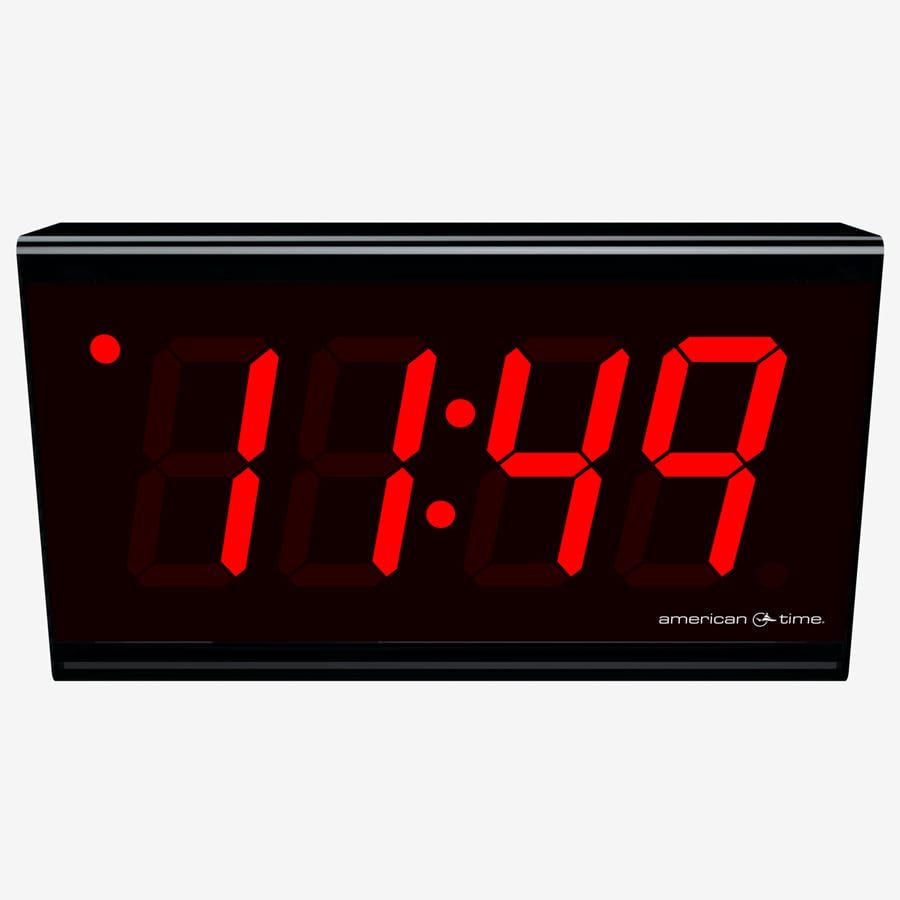
American Time SAD441RSB 4-inch Stand-Alone Digital Clock
4-inch red four-digit LED · 24V Molex · Surface mount
Call-center clocks need legibility, stable time, and low maintenance so agents can manage breaks and shift handoffs without guessing.
Quick answer
If the clock supports breaks, staffing, or shift handoffs, buy for the farthest seat and the brightest part of the room, not for the office near the wall.
Field option
Source and product details are checked against the linked product page. Availability and price can change.
American Time
4-inch red four-digit LED · 24V Molex · Surface mount
The best wall clock for a call center is not a decorative clock scaled up until it fills the wall. It is an operational display. Agents use it to judge break timing, supervisors use it during staffing changes, and the whole floor relies on it as a common reference when phones, ticket systems, and local computer clocks do not look exactly the same.
Start at the farthest workstation, not at the mounting point. Measure the distance to the proposed clock and check what sits between the two: monitor arms, partitions, hanging lights, and reflections from windows. A display that looks excellent at the front of the room may become a red blur from the back row.
Digit height matters more than the product’s overall width. High-contrast red or amber digits can be effective in a large workspace, but brightness must be controlled so the display does not become a permanent light source in the agents’ peripheral vision. A clock that is visible but not aggressive is easier to live with across a full shift.
Before buying, decide which process the clock supports. If it is only a general time reference, a battery wall clock may be sufficient. If it controls scheduled breaks, queue coverage, or shift handoffs, a few minutes of drift can become an operational argument. The display should be accurate, stable, and easy to verify.
For a single site, an atomic or network-synchronized option may be enough. For multiple floors or locations, consider whether every clock needs the same source of time. Enterprise systems cost more because they reduce the maintenance loop: fewer manual resets, fewer visits to a high wall, and less uncertainty about whether two rooms are showing the same minute.
Call centers often combine bright overhead lighting with rows of glossy screens. Place the clock where it can be read without staring into a reflected light panel. If possible, mount it perpendicular to the strongest window rather than directly opposite it. The bottom edge should remain above monitor clutter but within a natural glance angle.
Avoid mounting the display behind a supervisor’s desk if agents are expected to use it. The clock belongs in the shared visual field. Also plan the cable path before installation. A visible power cable undercuts the reason many operations teams choose a wall display in the first place.
The American Time SAD441RSB is the sort of commercial digital clock to evaluate for a call-center floor because it is designed as a stand-alone red four-digit surface display rather than a decorative consumer wall clock. Its value is not visual drama. It is the combination of readable digits, a commercial mounting context, and a form that can serve a shared room.
For smaller offices with less demanding visibility, a consumer atomic display may be adequate. Do not choose a commercial unit simply because it looks more serious. Choose it when the room, mounting height, synchronization requirement, or maintenance cost justifies the step up.
Finally, involve the people who will read the clock every day. Ask an agent in the back row whether the digits are comfortable, whether the brightness is distracting, and whether the clock is visible during a normal call. That five-minute test will tell you more than a product photo taken from three feet away.
Sources used for product grounding: American Time SAD441RSB official product page.
Related reading
Meeting Room
Atomic clocks reduce time drift automatically, while quartz clocks are simpler and quieter to own when perfect synchronization is not required.
Meeting Room
A shared, high-visibility countdown timer turns the wall into a neutral arbiter that keeps boardrooms and workshops on schedule.
Meeting Room
A productivity wall clock must be readable across a room, free of distracting features, and precise enough to end debates about time.