American Time
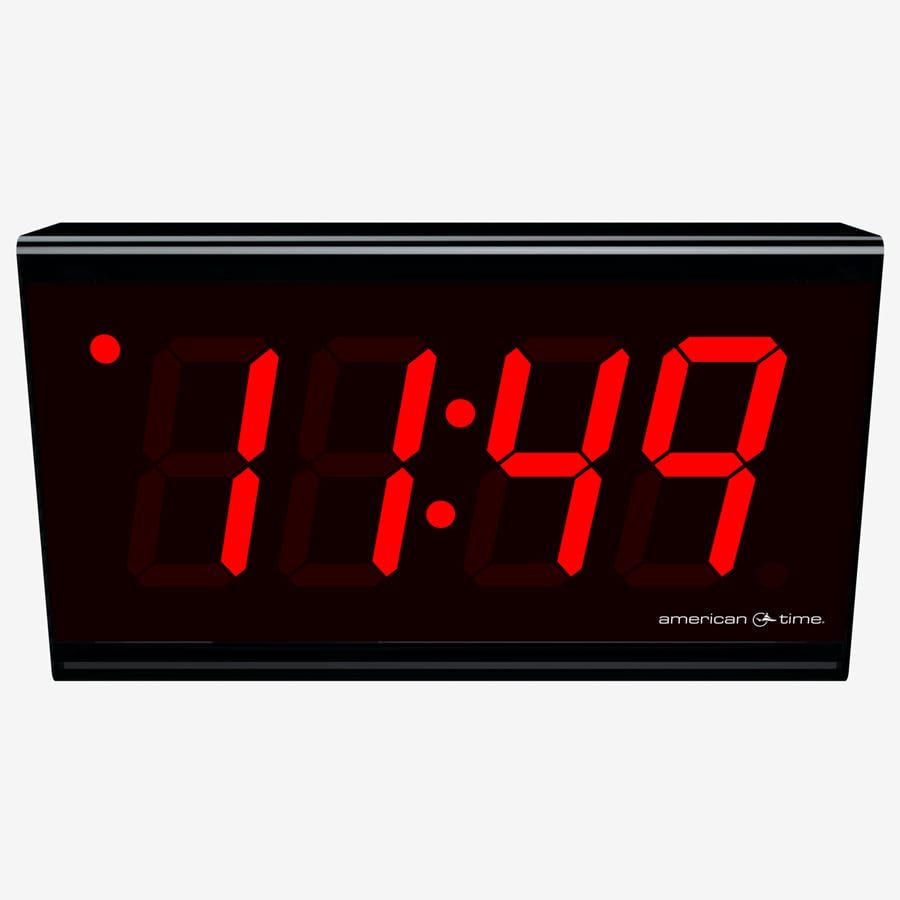
American Time SAD441RSB 4-inch Stand-Alone Digital Clock
4-inch red four-digit LED · 24V Molex · Surface mount
A loading-dock clock should be readable across a noisy work zone, protected from glare and dust, and accurate for deliveries and shift changes.
Quick answer
Choose a large digital clock for exact dispatch and shift timing; choose a protected analog clock when the dock mainly needs durable general time awareness.
Field option
Source and product details are checked against the linked product page. Availability and price can change.
American Time
4-inch red four-digit LED · 24V Molex · Surface mount
The best loading-dock wall clock is large, high contrast, protected from dust and changing temperatures, and readable across the work zone. Choose digital time when dispatch and shift handoffs depend on exact minutes. Choose a durable analog clock when the dock mainly needs a shared sense of time.
Loading docks combine long viewing distances, open doors, vehicle lights, dust, noise, and rapid movement. A small office clock mounted near a personnel door will disappear as soon as the team is working at the far end of the dock.
Stand where drivers, dispatch staff, and dock workers actually need the time. Check the view from inside the building, at the trailer position, and near the staging area. The clock should remain readable when the dock door is open and daylight changes the contrast.
| Dock Condition | Weak Clock Behavior | Better Signal |
|---|---|---|
| Long distance | Small numerals disappear | Large digits or oversized face |
| Open dock doors | Sunlight washes out display | High contrast and glare control |
| Dust and debris | Exposed movement becomes dirty | Protected housing |
| Shift handoffs | Teams debate the current time | Accurate, shared reference |
| Vehicle activity | Clock is hidden behind equipment | Elevated unobstructed placement |
The dock clock should be readable without walking away from the loading task.
Large digital displays are often the practical choice for loading docks because workers can read exact minutes quickly. Choose a display with strong contrast, brightness control, and protected electronics. Do not rely on a bright display alone; glare can make even large digits disappear.
Analog clocks can work in lower-dust or sheltered docks. Choose a large face, bold hands, and a protective cover that can be cleaned. A decorative exposed mechanism is a poor fit for a work zone where dust and vibration are routine.
Consider the dock’s actual temperature range rather than the warehouse office temperature. Open doors can expose the clock to cold air, heat, humidity, and rapid changes. Verify that the clock’s housing and power system fit those conditions.
Mount the clock high enough to avoid pallets, carts, and temporary staging, but not so high that maintenance requires complicated access. Keep it away from direct impact paths and from walls that vibrate heavily when vehicles dock.
If dispatch, carrier appointments, or labor handoffs depend on the clock, define how it is checked. Quartz is adequate when staff correct it routinely. Network or centralized synchronization can help multi-dock operations, but only when the network and power plan are reliable.
Keep the face accessible for cleaning. Dust that accumulates on a lens reduces contrast before the clock appears visibly dirty. A maintenance schedule is part of the clock choice.
| Clock Type | Best For | Skip If |
|---|---|---|
| Large digital wall clock | Dispatch and shift timing | The display cannot handle the environment |
| Protected analog clock | Sheltered loading areas | Exact minutes are critical |
| Synchronized clock | Multi-dock operations | There is no dependable time source |
| Small office clock | Staff rooms | Workers need to read it from the dock |
Choose a loading-dock clock from the farthest working position and test it under open-door daylight. Large contrast, protected housing, and a clear maintenance plan matter more than extra features. Use synchronized digital time when the dock is part of a larger dispatch system.
Related reading
Meeting Room
Atomic clocks reduce time drift automatically, while quartz clocks are simpler and quieter to own when perfect synchronization is not required.
Meeting Room
A shared, high-visibility countdown timer turns the wall into a neutral arbiter that keeps boardrooms and workshops on schedule.
Meeting Room
A productivity wall clock must be readable across a room, free of distracting features, and precise enough to end debates about time.